
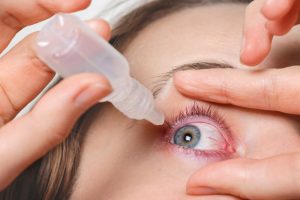
What is Dry Eye?
Dry eye syndrome is part of a larger condition known as ocular surface disease. This occurs when the eyes do not produce enough quality tears or they evaporate too quickly, causing discomfort, burning, gritty, stinging, red and even blurry vision.
Our tear film is made up of three layers. We have a water (aqueous) layer, oil (meibum) layer and mucous (mucin) layer that all contribute to quality of vision and comfort of our ocular surface. If one or more of these layers are compromised then that can lead to symptoms of chronic dry eyes.
Causes of Dry Eye?
- Environmental: dry air, windy, dusty, pollen
- Screen Time: hours of screen time, reduced blinking, over focusing
- Medications: antihistamines, decongestants, blood pressure, antidepressants, acne treatments, etc
- Cosmetic Products
- False Eyelashes
- Permanent Eyeliner
- Poor Eyelid Hygiene
- Blepharitis
- Demodex
- Chronic Styes
- Laxity of Eyelids
- Poor Eyelid Closure
- Eye Surgeries/Injuries: Post LASIK, Blepharoplasty
- Contact Lens Wear
- Autoimmune Conditions
There are a variety of dry eye treatments available to patients to target both the increased production of tears but more importantly to increase the quality of the tear film being produced and then protect that tear film.
Treatment Options
- Lubricating Eye Drops
- Applied Heat (heating eye masks, hand held heating roller, warm compresses)
- Eyelid Hygiene (eyelid cleansers, eyelid wipes)
- Non-Toxic Cosmetic Products (eyeliner, mascara, eyeshadows, etc)
- Meibomian Gland Expression
- Punctal Plugs
- Amniotic membranes
- Platelet Rich Plasma (PRP) Drops
- Scleral Contact Lenses
- Intense Pulse Light
- Radiofrequency